Smart Radiator Heating Retrofit for an Existing European Home
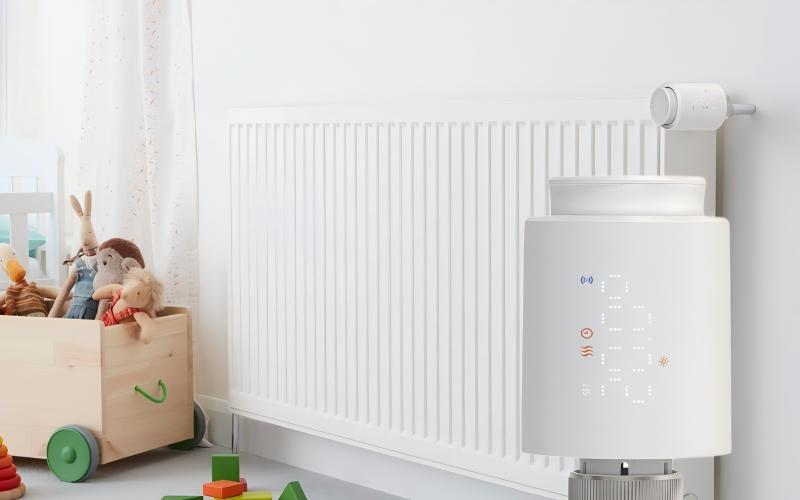
Adding room-by-room control to an existing radiator system without rebuilding the heating installation
Many European homes already have reliable hydronic radiator systems, but the way those rooms are controlled has changed little for years. Manual radiator valves or basic central control can keep the house warm, but they do not make it easy to manage different rooms according to how they are actually used.
This application focuses on upgrading the control layer rather than replacing the radiators or pipework. Smart radiator thermostats are fitted to compatible radiator valves so bedrooms, living areas and lower-use rooms can follow different temperature settings and schedules.
Building Type | Existing European house or apartment |
Heating System | Hydronic radiators |
Project Type | Heating controls retrofit |
Existing Equipment | Radiators and pipework retained |
Control Upgrade | Smart radiator thermostats / TRVs |
Connectivity | Wi-Fi or Zigbee, depending on the selected solution |
Main Goal | Introduce room-by-room temperature control with minimal changes to the existing heating installation |
The home has an established radiator heating system that is still mechanically suitable. The limitation is at room level: several radiators are adjusted manually, while the central heating schedule does not reflect how individual rooms are occupied.
The living room may need comfortable heat for much of the evening, bedrooms can run at a different temperature, and a guest room may be used only occasionally. Replacing the complete heating system would not solve this control problem efficiently. The more focused retrofit is to make the existing radiators individually controllable.
The project needs better control without turning a controls upgrade into a major renovation.
· Keep the existing radiators and hydronic pipework.
· Allow different rooms to use different temperature settings.
· Use schedules so lower-use rooms do not need to follow the same heating pattern as main living spaces.
· Keep installation practical for an occupied home.
· Provide remote or app-based control where the selected Wi-Fi or Zigbee system supports it.
· Leave a clear path for wider heating-system coordination where boiler-demand control is part of the project.
Compatible manual radiator heads are replaced with smart radiator thermostats. Each device measures the local room condition and adjusts the radiator valve according to the set temperature and schedule.
This gives each room its own control point without changing the radiator body or rebuilding the pipework. Wi-Fi or Zigbee versions can be selected according to the required system architecture and remote-control approach.
The retrofit can be applied to selected rooms first or rolled out across the home. This is useful where the customer wants to prioritize bedrooms and living areas before extending control to less frequently used spaces.
Living Room Smart TRV -> Radiator Valve
Bedroom Smart TRV -> Radiator Valve
Study Smart TRV -> Radiator Valve
Guest Room Smart TRV -> Radiator Valve
|
Wi-Fi / Zigbee control architecture
(according to selected solution)
Each room can respond to its own setpoint rather than relying on one thermostat to represent the entire home. When a room reaches the desired temperature, its radiator valve can reduce or stop local flow while other rooms continue to call for heat according to their own settings.
Where a project also requires coordinated boiler demand, that function should be designed as part of the wider heating-control architecture rather than assumed from the radiator thermostat alone.
The retrofit begins by checking the existing radiator valve bodies and confirming mechanical compatibility with the selected smart radiator thermostat or adapter. The installer then fits and calibrates the devices room by room.
Rooms are named and scheduled according to actual use rather than applying one identical program throughout the property. If the solution uses a gateway or app, connectivity is checked before the system is handed over.
Because the radiators and pipework remain in place, the work is concentrated at the control points, which makes this type of upgrade well suited to occupied homes.
The value comes from making an existing heating system more controllable without replacing equipment that still performs its basic heating function.
· Adds independent temperature control to individual rooms.
· Allows schedules to reflect how different spaces are actually used.
· Retains existing radiators and pipework where they remain suitable.
· Reduces the amount of renovation work compared with a full heating-system replacement.
· Supports phased upgrades, from a few priority rooms to a wider whole-home installation.
· Creates a foundation for a more coordinated smart-heating system when additional heat-source control is required.
This approach is particularly suitable for existing houses and apartments with hydronic radiators, especially where the heating hardware still has useful service life but room control is limited. It is also relevant to renovation projects where occupants want better zoning and remote control without opening walls or replacing the radiator network.
Planning a Smart Radiator Heating Retrofit?
CosyClimate provides Wi-Fi and Zigbee radiator thermostat solutions for residential heating upgrades. We can help review the valve interface, room-control requirements and wider heating architecture before product selection.
Contact CosyClimate to discuss existing radiator valve type and project requirements with us, and we can recommend a suitable control approach.
Email:info@cosyclimate.com
Phone:+86 13520339098
Add:Tongzhou District, Beijing, 101199 China