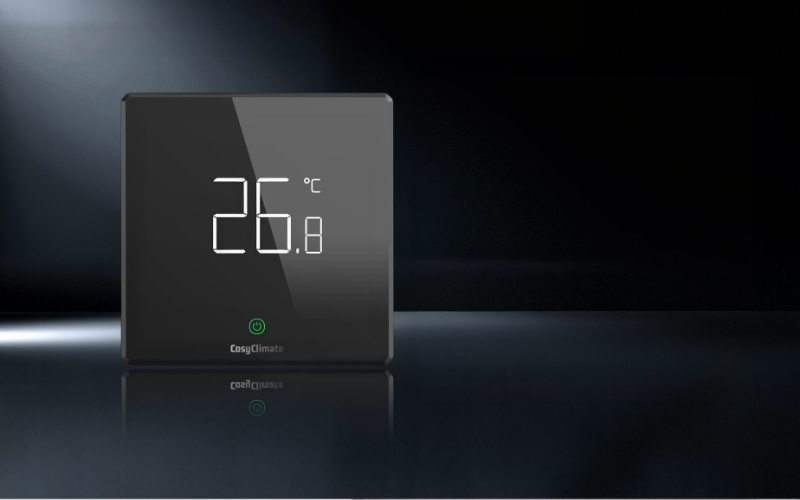
[July, 2026]Quick Answer: What Is an Underfloor Heating Thermostat?An underfloor heating thermostat is a control device designed to regulate floor heating systems by monitoring room temperature, floor temperature, or both.Unlike a standard room thermostat, an underfloor heating thermostat must consider the unique characteristics of floor heating:· Slow temperature response · Floor material limitations · Zone control requirements · Compatibility with actuators, valves, heat pumps, or electrical heating loads Depending on the system design, an underfloor heating thermostat may control:· Thermal actuators connected to a water heating manifold · Electric heating cables or heating mats · Heat pumps or boilers through control signals · Smart home systems through WiFi, Zigbee, Modbus, BACnet, or other communication protocols The best thermostat is not the one with the most features.It is the one that matches the heating system, building application, and user's expectations. Most Underfloor Heating Problems Are Actually Control ProblemsWhen an underfloor heating system does not perform as expected, the thermostat is rarely the first thing people question.Most people immediately suspect:· The heat pump is not powerful enough · The boiler is not working correctly · The heating pipes were installed incorrectly · The insulation is insufficient Sometimes those assumptions are correct.However, after years of working with HVAC control systems, one thing becomes clear:Many comfort problems are not caused by insufficient heating capacity. They are caused by incorrect control.Typical complaints include:"The room temperature is correct, but the floor still feels uncomfortable.""The heating keeps running, but energy consumption is higher than expected.""One room reaches the target temperature, while another room does not.""The system worked well at first, but performance became unstable later."In many cases, the heating source is operating normally.The problem is the thermostat is not correctly managing the system.A thermostat does not create heat.It decides:· When heating starts · How long heating operates · How accurately temperature is maintained · How different zones respond · How users interact with the system This is why selecting the thermostat should be considered part of the HVAC design process—not simply a final product purchasing decision. Before Choosing a Thermostat, Understand Your Heating SystemOne of the most common mistakes in underfloor heating projects is selecting the thermostat too early.Many buyers start with questions like:"Which underfloor heating thermostat has the best display?"or:"Which model has the best mobile app?"However, the correct selection order should be:Heating system → Control method → Compatibility → User requirements → Smart featuresNot the other way around.Before comparing thermostat models, identify the type of underfloor heating system.There are two main categories:1. Water underfloor heating 2. Electric underfloor heating Although both provide comfortable floor heating, the thermostat requirements are completely different. 1. Water Underfloor Heating ThermostatHow Does Water Underfloor Heating Work?Water underfloor heating uses warm water circulating through pipes installed beneath the floor.The thermostat usually does not switch the heating source directly.Instead, it sends a control signal to components such as:· Thermal actuators · Manifold wiring centers · Zone valves · Heat pump or boiler controls A typical control structure looks like this:Room Thermostat | |Wiring Center | |Thermal Actuator | |Heating Manifold | |Floor Heating CircuitThe thermostat's role is to maintain room comfort by controlling each heating zone.Where Is Water Underfloor Heating Commonly Used?Water systems are widely used in:· New residential buildings · Villas · Apartments · Hotels · Office buildings · Low-energy houses · Heat pump projects Because water underfloor heating is usually designed as a long-term heating solution, thermostat selection should focus on:· Stability · Compatibility · Energy management · Future integration The Most Important Selection Factors for Water Underfloor Heating1. Actuator CompatibilityThis is one of the most overlooked issues.A thermostat may appear technically advanced, but if it cannot correctly control the actuator system, the project will still fail.Before selection, confirm:VoltageCommon actuator options include:· 230V thermal actuators · 24V thermal actuators Actuator TypeCommon configurations include:· Normally Closed (NC) · Normally Open (NO) Number of ZonesA large apartment or commercial project may require:· Multiple thermostats · Multi-zone wiring centers · Central control A Real Installation ProblemOne common situation in HVAC projects:A contractor receives a thermostat replacement request because several rooms are not heating correctly.The thermostat appears to be the problem.After checking the installation, the actual issue is discovered:The thermostat was designed for a 230V normally closed actuator, while the installed manifold used 24V normally open actuators.Nothing was defective.The components simply were not designed to work together.This is why experienced installers usually check system compatibility before comparing thermostat features. 2. Electric Underfloor Heating ThermostatHow Does Electric Floor Heating Work?Electric underfloor heating uses:· Heating cables · Heating mats · Electric heating films Unlike water systems, the thermostat normally switches electrical power directly to the heating element.This means electrical specifications become a critical selection factor. Key Considerations for Electric Underfloor Heating Thermostats1. Maximum Switching LoadA thermostat must be suitable for the electrical load it controls.Always confirm:· Operating voltage · Maximum current · Maximum power rating A common mistake is selecting a thermostat based only on appearance or smart features.The display may look excellent.The mobile app may work perfectly.But if the relay capacity is insufficient, long-term reliability can become a problem. 2. Floor Sensor SupportFor electric underfloor heating, a floor sensor is strongly recommended.The reason is simple:The thermostat should not only know the room temperature.It should also understand the floor temperature.This is especially important for:· Wooden flooring · Engineered wood · Laminate · Vinyl flooring Without floor temperature protection, the system may create:· Excessive surface temperature · Floor material damage · Uncomfortable heating conditions Water vs Electric Underfloor Heating Thermostat ComparisoItemWater Underfloor HeatingElectric Underfloor HeatingHeat sourceWarm water circulationElectrical heating elementThermostat controlsActuators, valves, heating systemElectrical power outputMain compatibility concernActuator and control methodElectrical load capacityFloor sensorRecommended depending on flooringHighly recommendedCommon applicationsHouses, apartments, hotels, commercial buildingsBathrooms, renovations, small heating areasSmart controlWiFi, Zigbee, Modbus optionsWiFi, Zigbee optionsInstallation focusSystem integrationElectrical safetyThe First Decision RuleBefore asking:"Which thermostat should I buy?"Ask:"What exactly am I controlling?"A thermostat controlling a water manifold in a heat pump project is solving a completely different problem from a thermostat directly switching an electric heating mat.The product may look similar.The engineering requirements are not.How to Choose the Right Underfloor Heating Thermostat: The Engineering Decision ProcessChoosing an underfloor heating thermostat becomes much easier when the selection process follows the correct order.Many purchasing mistakes happen because buyers start with visible features:· Touchscreen display · Mobile app · Colour options · Smart functions However, these are usually not the factors that determine whether the heating system works correctly.A professional selection process starts with the fundamentals:1. What heating system is installed? 2. What equipment does the thermostat need to control? 3. Who will use the building? 4. What level of integration is required? 5. What problems could appear after installation? The Seven Questions Every Buyer Should Answer Before Ordering1. What Type of Flooring Will Be Installed?Floor material is one of the most underestimated factors in thermostat selection.Many projects select the thermostat before the final flooring specification is confirmed.This rarely creates problems with ceramic tiles.However, it can become a major issue when the final flooring changes to materials with stricter temperature limitations. Ceramic Tile and Stone FlooringCeramic tiles and stone are excellent conductors of heat.The main priorities are usually:· Stable room temperature · Comfortable heat distribution · Energy-efficient operation In many cases, room temperature control is sufficient. Wood, Laminate and Vinyl FlooringWood-based and synthetic flooring materials require more careful temperature management.Excessive floor temperature may lead to:· Material expansion · Surface deformation · Reduced flooring lifetime For these applications, an external floor sensor is highly recommended.The thermostat can monitor:· Room temperature · Floor temperature limitation This provides better protection while maintaining comfort. Engineer's TipDo not choose the thermostat first and decide the flooring later.The flooring specification should influence the control strategy.A thermostat that works perfectly for ceramic tiles may not be the right solution for engineered wood flooring. 2. Who Will Use the Building Every Day?A thermostat is not only a technical device.It is an interface between the HVAC system and the people using the building.Different applications require different priorities. Residential ProjectsTypical users:· Homeowners · Families · Villa owners Important functions:· Simple operation · Weekly scheduling · Holiday mode · Energy-saving programs · Optional WiFi control For private homes, convenience often matters more than complex integration.A homeowner may appreciate adjusting the temperature remotely before arriving home. Hotels and Hospitality ProjectsHotels require a different approach.A guest usually does not want to understand HVAC settings.They simply expect:· Comfortable temperature · Easy adjustment · Reliable operation Important thermostat features may include:· Simple user interface · Temperature limitation · Lockable settings · Central management capability A common mistake is adding too many visible functions.More options do not always mean a better guest experience. Rental ApartmentsRental properties create another challenge.The owner wants control.The tenant wants simplicity.Smart thermostats can provide value through:· Remote monitoring · Temperature adjustment · Schedule management For properties such as holiday apartments, remote control can help prevent unnecessary heating when nobody is staying. 3. Does the Project Really Need WiFi?WiFi has become one of the most popular thermostat features.However, WiFi is often misunderstood.Many buyers assume:Smart = WiFi = Energy SavingThis is not necessarily true.WiFi provides connectivity.It does not automatically improve heating efficiency.Energy savings mainly come from:· Correct scheduling · Appropriate temperature settings · Avoiding unnecessary operation · Better system management When WiFi Makes SenseWiFi thermostats are valuable for:Private HomesExamples:· Remote temperature adjustment · Smartphone control · Smart home integration Holiday HomesUseful because owners may want to:· Preheat before arrival · Reduce heating during empty periods · Monitor the property remotely Rental PropertiesProperty managers can benefit from remote access. When Modbus or BACnet May Be Better Than WiFiFor commercial projects, professional communication protocols are often more suitable.Examples:· Hotels · Office buildings · Shopping centres · Large residential projects A facility manager usually does not want to control 100 rooms through separate mobile applications.They need:· Central supervision · Stable communication · Integration with BMS platforms In these applications:Modbus, BACnet, or KNX may provide more practical value. A Simple Communication Selection GuideProject TypeRecommended Control MethodPrivate houseStandalone / WiFiVillaWiFi / Smart home integrationApartment buildingWiFi / Modbus depending on requirementsHotelModbus / BACnet / Central controlOffice buildingModbus / BACnet / KNX4. Will the Heating System Expand in the Future?Many projects change after the initial installation.A small residential system may later require:· Additional heating zones · Smart home integration · Remote management · Central monitoring Replacing thermostats later can be expensive, especially when:· Wiring has already been completed · Interior decoration is finished · Multiple rooms are involved For distributors and contractors, selecting a flexible thermostat platform can reduce future limitations. 5. Is the Thermostat Compatible With the Complete System?A thermostat should never be evaluated as an isolated product.It is one part of a complete control system.Before ordering, confirm: Output TypePossible requirements include:· Relay output · Dry contact · 0-10V control · Communication protocol Voltage CompatibilityCommon requirements:· AC230V · AC24V · Low-voltage control Sensor CompatibilityCheck whether the thermostat supports:· Built-in room sensor · External floor sensor · External room sensor · NTC temperature probe Control LogicSome projects require:· Simple on/off control · Proportional control · Heat pump coordination · Building automation integration The most advanced thermostat is useless if it cannot communicate correctly with the rest of the system. 6. Is More Functionality Always Better?One of the biggest misconceptions in thermostat selection is:More features always mean a better product.In reality, the best thermostat is often the simplest device that solves the actual problem. Features That Usually Provide Real ValueAccurate Temperature MeasurementThe foundation of comfort.Poor sensing accuracy creates:· Temperature fluctuations · User complaints · Unnecessary heating cycles Weekly SchedulingAllows the system to follow actual usage patterns.Example:· Lower temperature during working hours · Comfortable temperature before users return Temperature CalibrationUseful because installation environments vary.Calibration can compensate for:· Different wall positions · Heat influence from nearby equipment · Sensor installation differences Frost ProtectionUseful in:· Holiday homes · Seasonal buildings · Cold climate regions Child Lock or Menu LockImportant for:· Hotels · Public buildings · Rental properties Features That Often Matter Less Than Marketing SuggestsSome functions look impressive but provide limited practical benefit.Examples:· Decorative animations · Complex statistics that users never check · Excessive menu options · Large displays without useful information In HVAC control, reliability usually matters more than visual complexity.A thermostat is expected to work every day for years. Common Underfloor Heating Thermostat MistakesMany thermostat replacement cases are not caused by product failure.They are caused by incorrect selection or installation decisions. Mistake 1: Choosing the Thermostat Before Understanding the SystemThis is the root cause of many problems.A buyer sees:· WiFi · Touchscreen · Modern design and assumes it is suitable.But the real questions are:· What actuator is installed? · What voltage is required? · What control method does the system need? · Is a floor sensor required? Technical compatibility always comes first. Mistake 2: Installing the Thermostat in the Wrong LocationA thermostat measures the surrounding environment.Therefore, location matters.Avoid installation near:· Direct sunlight · External doors · Heat sources · Strong airflow areas Otherwise, the thermostat may detect incorrect temperatures.Example:A thermostat installed near sunlight may read the room as warmer than it actually is.The heating stops too early.The user feels uncomfortable. Mistake 3: Incorrect Floor Sensor InstallationThe floor sensor should measure the actual floor temperature.Common mistakes:· Installing too close to the heating cable · Placing it in a location affected by another heat source · Installing without a replaceable conduit The sensor should ideally be installed in a position where it can accurately represent the floor surface temperature. Mistake 4: Selecting the Wrong Actuator TypeFor water underfloor heating, always verify:· Voltage · Normally open or normally closed operation · Wiring method A thermostat cannot correct an actuator mismatch. Mistake 5: Expecting Underfloor Heating to React Like a RadiatorThis is one of the most common user misunderstandings.Underfloor heating is designed for:· Low temperature operation · Stable comfort · Long operating cycles It is not designed for rapid temperature changes.A radiator may heat a room quickly.Underfloor heating provides comfort through gradual and stable heat distribution.Large temperature adjustments often reduce efficiency rather than improve comfort.Choosing the Right Thermostat for Different Underfloor Heating ProjectsThere is no universal "best" underfloor heating thermostat.The correct choice depends on the project environment, system design, and user expectations.A thermostat that works perfectly in a private villa may not be suitable for a hotel.A model designed for a commercial BMS project may introduce unnecessary complexity in a small apartment renovation.The goal is not to select the most advanced thermostat.The goal is to select the simplest solution that fully satisfies the project requirements. Project-Based Thermostat Selection GuideProject TypeTypical RequirementsRecommended Thermostat FeaturesApartmentIndividual room comfort, simple operationWeekly scheduling, easy interface, optional WiFiVillaComfort, energy management, remote controlWiFi, floor sensor, holiday mode, smart functionsHotelGuest comfort and centralized managementLockable settings, stable operation, Modbus/BACnet integrationOffice BuildingBuilding automation and efficiencyModbus/BACnet, scheduling, centralized controlRenovation ProjectExisting wiring limitationsFlexible wiring, compatibility with existing systemOEM BrandLong-term product strategyCustom firmware, certifications, stable supply, technical supportThe Hidden Cost Is Usually Not the ThermostatA thermostat may be one of the smaller components in a heating project.However, choosing the wrong one can create costs far beyond the product price.Consider the real cost of a mistake:· Technician call-out costs · Installation delays · Customer complaints · Product replacement · Interior finishing damage · Loss of project reputation A thermostat may cost tens of euros.A service visit may cost several hundred euros.Replacing installed products after a building is completed can cost much more.This is why experienced HVAC professionals spend more time confirming compatibility before ordering.The cheapest thermostat is not always the lowest-cost solution. The Professional Selection Method: System First, Features SecondAfter working with different HVAC applications, one principle remains consistent:The thermostat should be selected around the heating system—not around the thermostat itself.A reliable selection process follows this order: Step 1: Identify the Heating SourceAsk:· Is it water or electric underfloor heating? · Is the system connected to a boiler, heat pump, or independent electrical heating? Step 2: Identify the Control MethodAsk:· Does the thermostat control an actuator? · Does it switch electrical heating directly? · Does it communicate with a BMS? Step 3: Confirm CompatibilityCheck:· Voltage · Output type · Sensor requirements · Communication protocol Step 4: Understand User RequirementsAsk:· Who uses the building? · Is remote control required? · Is simple operation more important than advanced features? Step 5: Consider Future ExpansionAsk:· Will additional zones be added? · Will smart home or building automation be introduced later? Common Misconceptions About Underfloor Heating ThermostatsMisconception 1: The Most Expensive Thermostat Provides the Best PerformanceNot necessarily.A high-end thermostat may include:· Large touchscreen · Advanced app functions · Multiple smart features However, if it does not match the heating system, it cannot provide better performance.A correctly selected simple thermostat can outperform an advanced but unsuitable model. Misconception 2: WiFi Automatically Saves EnergyWiFi provides remote access.It does not automatically reduce energy consumption.Energy efficiency depends on:· Correct temperature settings · Proper schedules · System design · User behaviour A WiFi thermostat with poor scheduling habits may consume more energy than a simple programmable thermostat. Misconception 3: Underfloor Heating Should Heat as Quickly as a RadiatorUnderfloor heating works differently.Its advantage is not speed.Its advantage is:· Even heat distribution · Lower operating temperature · Long-lasting comfort Trying to operate it like a radiator often leads to inefficient control. Misconception 4: A Thermostat Is Only a User InterfaceA thermostat is much more than a display on the wall.It is the decision-making point of the heating system.It determines:· When energy is used · How stable the temperature remains · How different zones operate · How the system communicates with other equipment Engineer's Checklist Before Final ApprovalBefore approving an underfloor heating thermostat for a project, confirm:Heating System☐ Water underfloor heating or electric underfloor heating?☐ Connected to boiler, heat pump, or independent heating? Electrical Compatibility☐ Correct voltage?☐ Correct switching capacity?☐ Correct actuator type? Temperature Control☐ Room sensor required?☐ Floor sensor required?☐ Floor temperature limitation needed? Communication☐ Standalone control?☐ WiFi?☐ Zigbee?☐ Modbus?☐ BACnet?☐ KNX? Installation☐ Wall box dimensions confirmed?☐ Wiring available?☐ Existing system compatibility checked? A five-minute technical check before ordering can prevent hours of troubleshooting later. Frequently Asked QuestionsCan one thermostat control multiple underfloor heating zones?Normally, each independently controlled room requires its own thermostat.For water underfloor heating systems, multiple thermostats are usually connected through a wiring center that manages several thermal actuators.This allows each room to maintain its own temperature setting. Is a floor sensor always required for underfloor heating?No.However, it is strongly recommended in many applications.A floor sensor is especially valuable for:· Electric underfloor heating · Wooden flooring · Laminate · Vinyl flooring It helps prevent excessive floor temperatures and improves comfort. Can I use a normal room thermostat for underfloor heating?Sometimes, but it depends on the system.A standard thermostat may not support:· Floor temperature protection · Thermal actuator control · Specific heating logic For many underfloor heating projects, a dedicated thermostat provides better control and protection. Does WiFi reduce energy consumption?Not directly.WiFi only provides communication.Actual energy savings come from:· Proper scheduling · Avoiding unnecessary heating · Accurate temperature management · Correct system commissioning · Can I replace my existing underfloor heating thermostat?In many cases, yes.However, before replacement check:· Existing wiring · Voltage · Output type · Actuator compatibility · Floor sensor compatibility A direct replacement is only successful when the new thermostat matches the existing system requirements. What is the difference between a water floor heating thermostat and an electric floor heating thermostat?The main difference is what the thermostat controls.A water underfloor heating thermostat usually controls actuators or valves connected to a manifold.An electric underfloor heating thermostat usually switches electrical power directly to heating cables or mats.Because the control method is different, they should not be selected in the same way. Final Thoughts: The Right Thermostat Is the One That Fits the SystemChoosing an underfloor heating thermostat is not about finding the model with the longest specification list.It is about understanding the complete heating system.The right thermostat should match:· The heating method · The control components · The flooring material · The building application · The user's expectations · Future expansion requirements A well-selected thermostat can improve:· Comfort · Energy management · Installation reliability · Long-term system performance For HVAC distributors, installers, OEM brands, and system integrators, the thermostat should be viewed as part of the complete heating solution—not simply as a wall-mounted accessory. The CosyClimate Approach: Selecting Controls Around Real HVAC ApplicationsAt CosyClimate, we believe HVAC control should start with the application, not the product catalogue.Different projects require different control strategies.A residential heat pump system, a hotel floor heating project, and a commercial building automation system may all use "thermostats," but the engineering requirements are completely different.Our approach is based on understanding:· Heating system design · Control requirements · Communication needs · Installation conditions · Long-term project goals With experience in HVAC control solutions including underfloor heating, fan coil systems, heat pumps, smart thermostats, actuators, sensors, and building communication protocols, we help partners select suitable control solutions for different markets and applications. Before You Make Your Final DecisionBefore comparing thermostat models, answer these five questions:1. What exactly am I controlling?A heating cable?A thermal actuator?A heat pump?A complete building control system? 2. Who will use the system every day?A homeowner?Hotel guests?Office employees?A facility management team? 3. What problem should the thermostat solve?Remote access?Energy management?Zone control?BMS integration? 4. What mistake would be most expensive to correct later?Wrong voltage?Wrong actuator?Wrong communication method?Wrong sensor strategy? 5. Is this thermostat suitable for future requirements?More zones?Smart home integration?Building automation? The best thermostat is not the one with the most impressive specification sheet.It is the one that quietly performs its job for years because it was selected correctly from the beginning.Need Help Selecting the Right Underfloor Heating Control Solution?Choosing an underfloor heating thermostat is not only about selecting a product with the right specifications.The correct solution depends on the complete system:· Heating source · Actuator type · Floor material · Control requirements · Communication protocol · Future expansion plans If you are working on a residential, commercial, or OEM project and need support selecting the right thermostat or HVAC control solution, our technical team can help evaluate the application requirements and recommend a suitable approach.Share your project details with us, including:✓ Heating system type✓ Number of zones✓ Required control method✓ Communication requirements✓ Existing wiring informationWe will help you identify a practical control solution that fits your application.Discuss Your HVAC Control Project →